Case study
Enabling image reuse verification for a multi-brand, multi-region media network
Summary
Condé Nast’s syndication tool lacked visibility into image reuse rights. I designed a rights-aware experience that surfaces data from an AI-powered rights engine↗ (opens in a new tab), giving adaptation editors a breakdown of image reuse rights.
Impact
CSAT up 13% points from 77% to 90% within 12 months.
Scope
- Discovery user research
- UX and UI design
- UX writing
- MVP scoping
Background
What is content syndication?
At global multi-brand media companies like Condé Nast, content syndication refers to the framework where regional editions adapt and republish licensed content from each other.
Why is it done?
- Optimize resources and reduce overhead
- Expand audience reach and engagement
- Meet content volume commitments
Core jobs of an adaptation editor
①
Identify original stories that resonate with the destination
Goal: fulfill the destination edition's content strategy
②
Verify if the story’s assets can be reused by the destination
Goal: uphold legal compliance with regard to content reuse
③
Adapt, localize, and publish the story for the destination
Goal: align with the destination’s regional publishing requirements
Problem Statement
Stories typically comprise two core assets: manuscripts and images — two distinct IP with different licensing frameworks.
Condé Nast’s syndication tool creates a centralized index of all stories eligible for syndication across brands and regions, based on manuscript rights, but lacked a mechanism for surfacing the reuse status of a story’s accompanying images. Therefore adaptation editors relied on a lengthy, manual process to verify image reuse rights.
Discovery user research
Research scope & participants
Semi-structured discovery interviews with adaptation editors from 6 regional editions were conducted to:
- Map the manual image verification process within the larger syndication workflow.
- Understand where editors got stuck, and what they did about it.
- Validate the need for a centralized solution for clearing a story’s images for reuse.
Escalation of image reuse verification
①
Self help — by cross-referencing image metadata across tools to assess credits and licensing.
②
Internal consultation — with editorial colleagues across regions via dedicated outreach channels.
③
Specialist consultation — to address complex requests like clearing embedded art or rights acquisition.
Post-verification decision paths
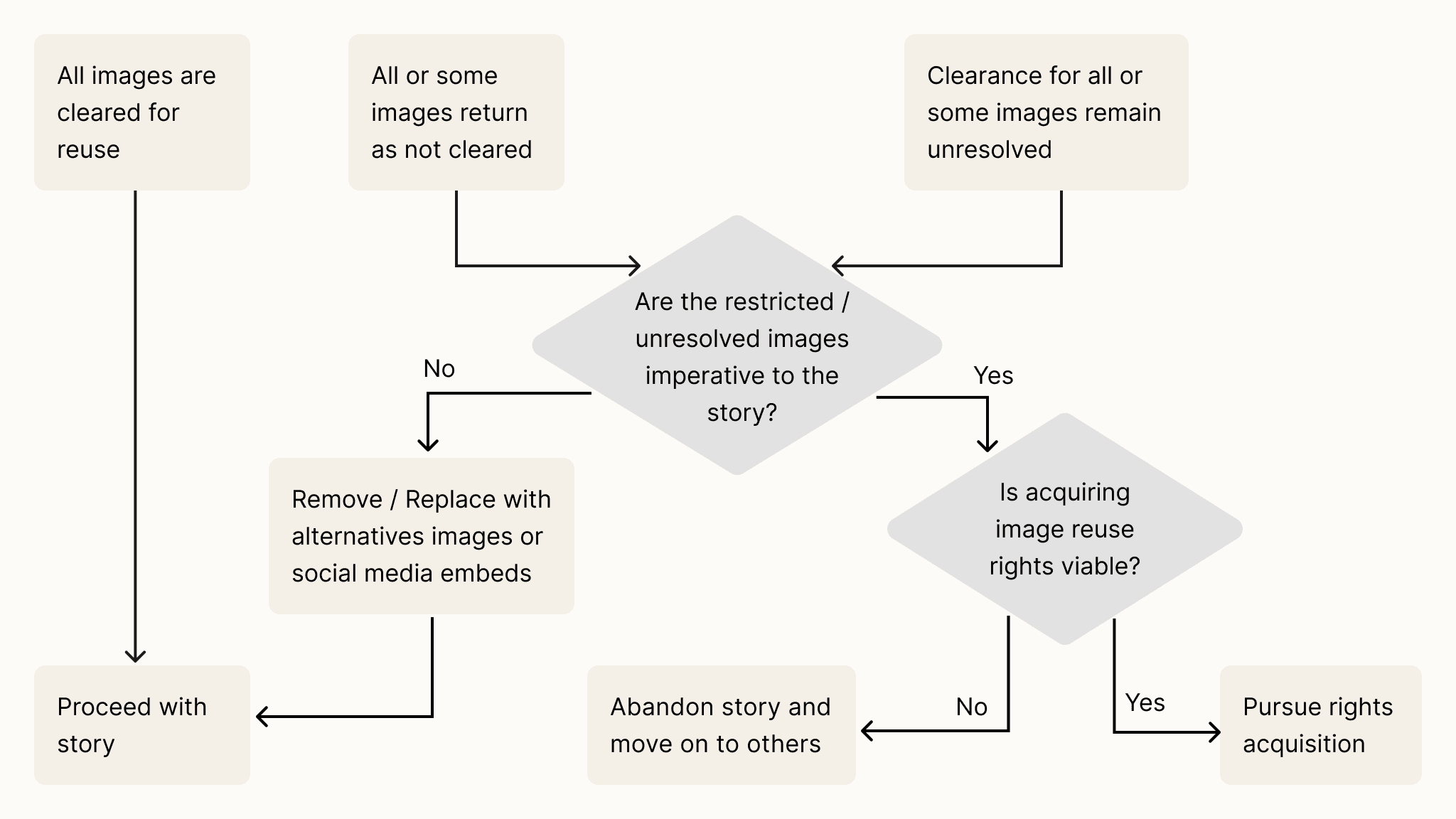
Key Insights
Image reuse clearance directly impacts content strategy
Compliance aside, the mix of images cleared vs not cleared, along with their narrative weight directly impacted which stories editors would proceed with.
Editors risk missing out on high-potential stories
Editors often selected stories with licensed stock imagery for their faster verification process over ones with commissioned photos or press images.
The story preview modal was an under-utilized touchpoint
The modal was for pushing draft copies to the destination CMS, while image reuse verification and editorial evaluation happened outside the tool.
Design decisions, tradeoffs and constraints
Scalable pattern that prioritizes structured evaluation over article recreation
- Tabbed interface reclaims screen space to surface image reuse status, regional metadata and more — so that editors can make informed decisions.
- The story header (title, description, author, thumbnail) stays atop as the identifier, so editors have no doubts about which story they’re reviewing.
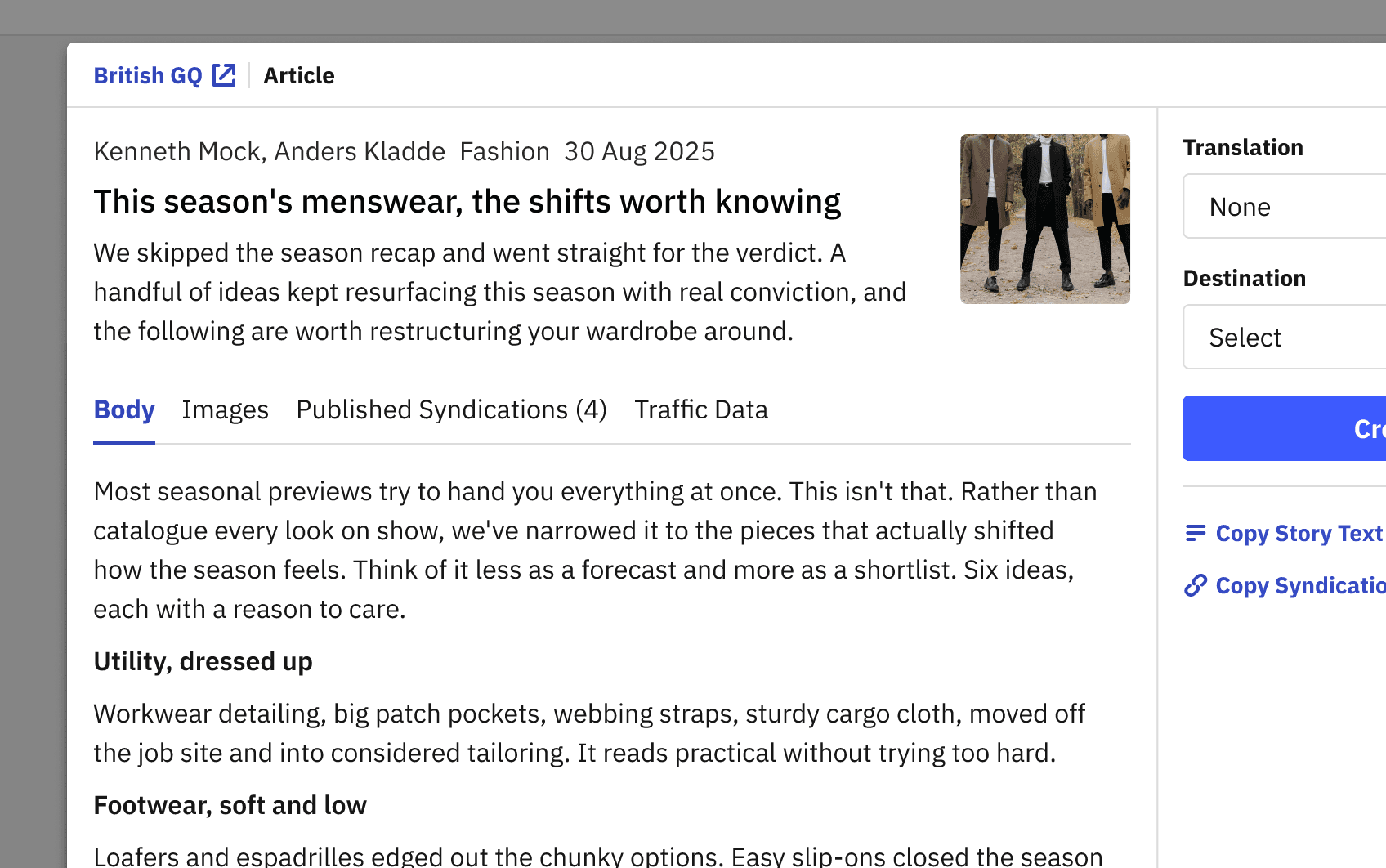
Images grouped by reuse status: Cleared; Not cleared; and Unverified.
- The syndication tool queries the rights management system↗ (opens in a new tab) which returns the reuse status of every image for the selected destination.
- Incremental data maturity necessitates an “Unverified” bucket requiring editors to continue resolving that set manually.
- Compact thumbnail + credits for rapid visual audit.
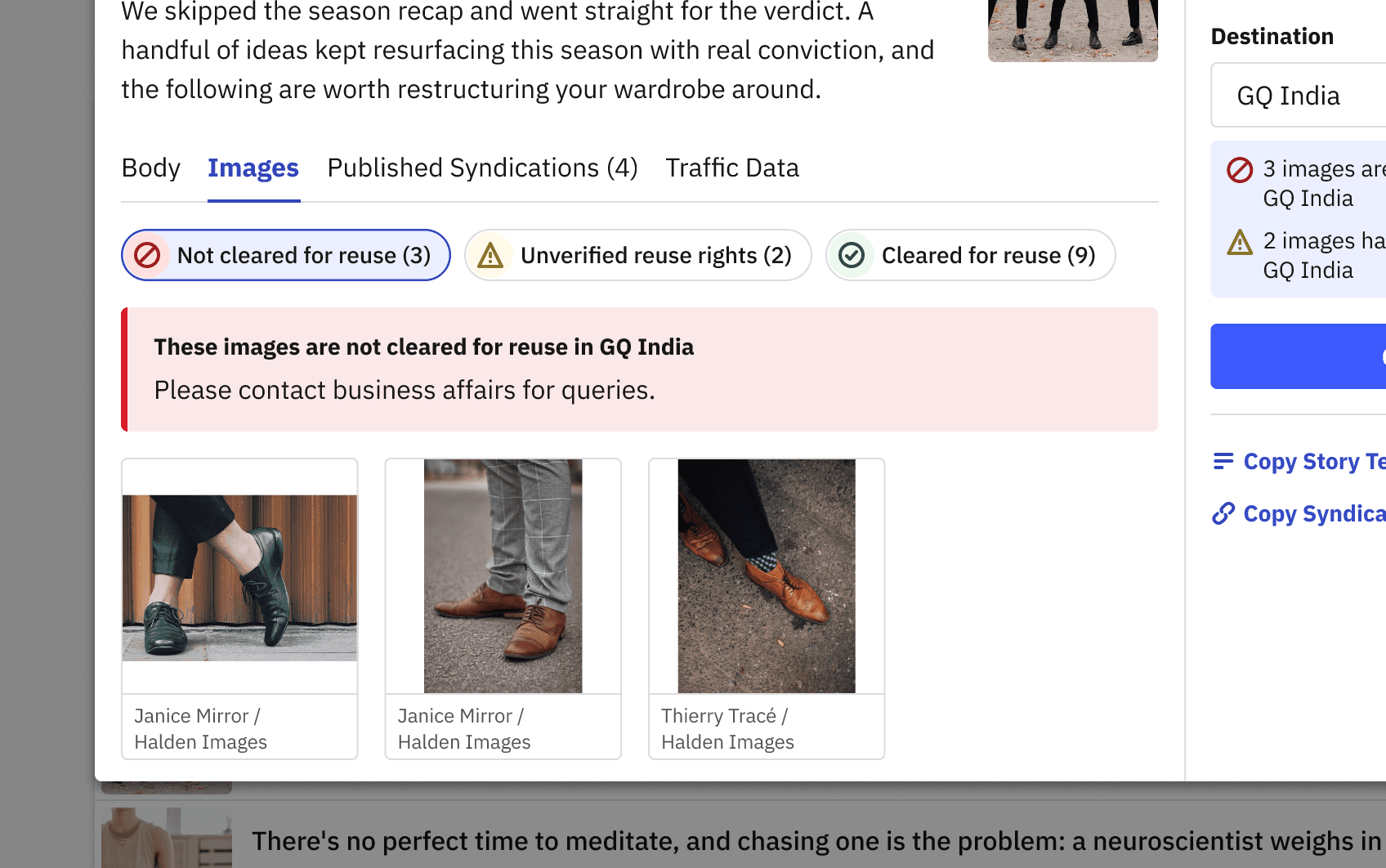
A revised action panel cautions editors without getting in the way of their work.
- Image reuse summary at the point of action, for users who bypass the images tab.
- Draft creation remains enabled, allowing editors to retain full discretion to initiate drafts and subsequently replace images.
- Single-click copy link CTA anchors everyone to a single source of truth.
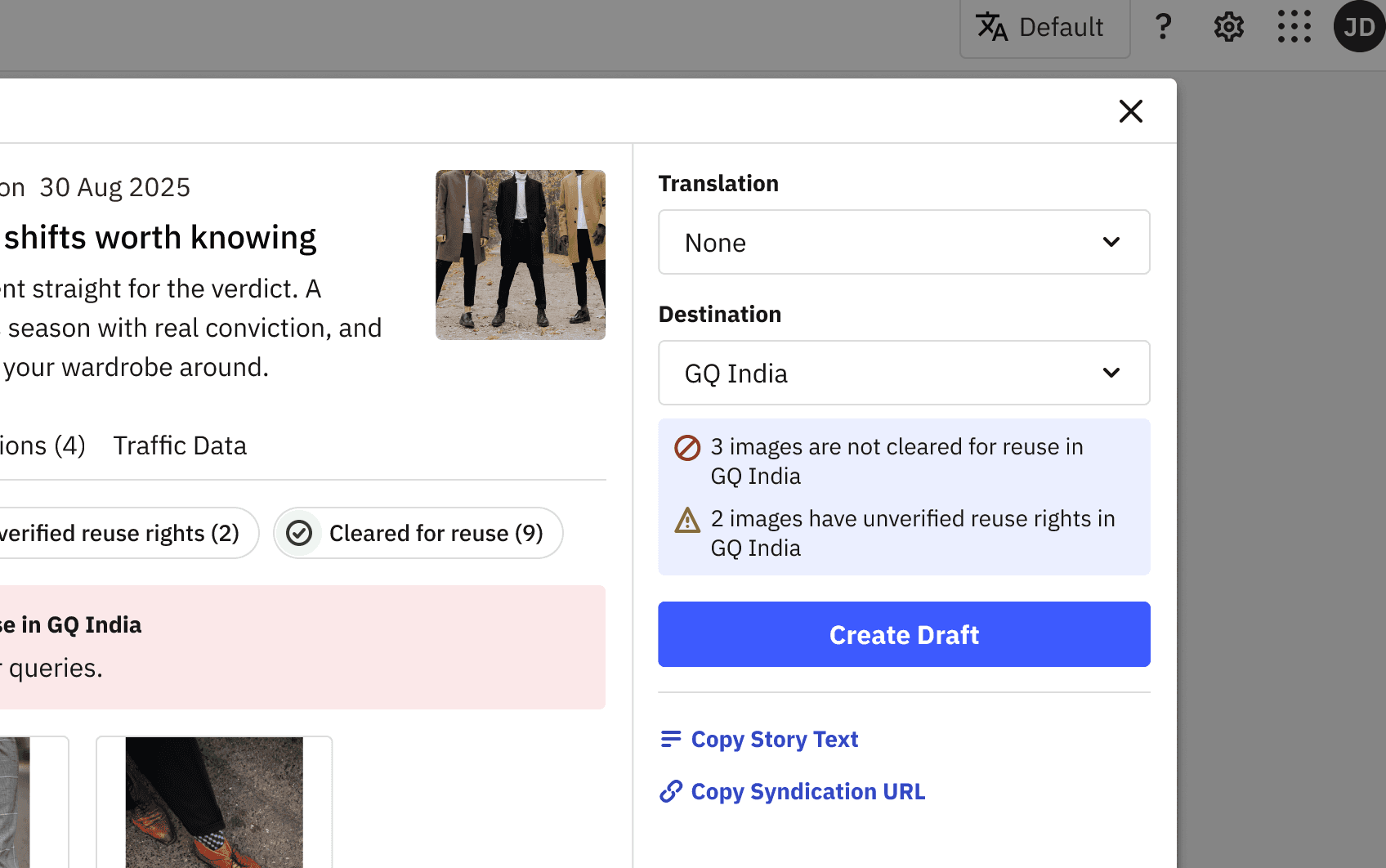
Rights-aware design
System states
Outcome
The syndication tool's CSAT score rose 13 points from 77% to 90% in 12 months. Improvement was attributed to how the tool:
- allowed editors to shift their focus back to editorial evaluation
- enabled faster decisions with regard to story selection
- reduced the pile-up of unused draft copies in the destination CMS
Looking ahead
- System driven self-service and escalation for image reuse verification, contract visibility, and rights acquisition.
- Extend image reuse indication to other touchpoints.
- Incorporate more editorial metadata, if required.
Disclaimer: Product screens show placeholder articles, images, names and credits. Internal references are obfuscated.